





Cabinet door latches and catches, by type
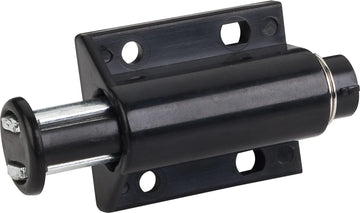
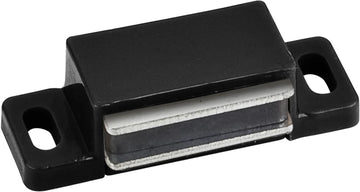
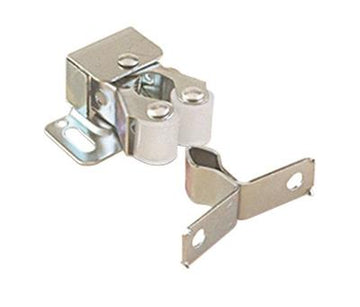
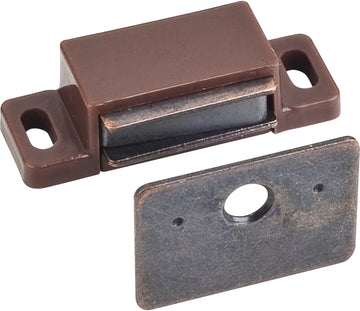
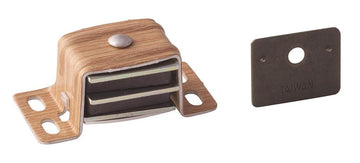
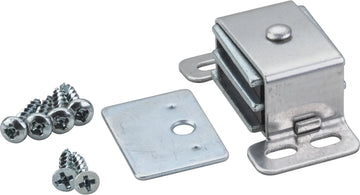
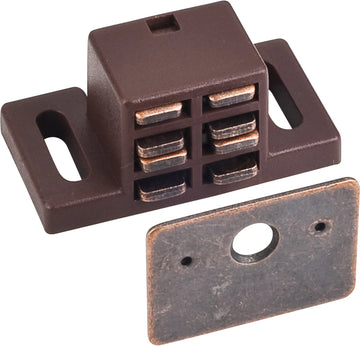
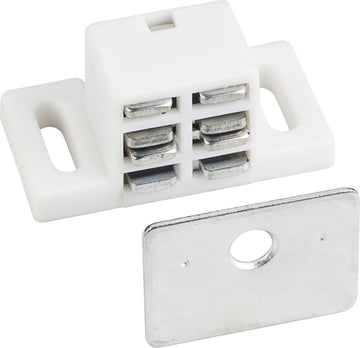
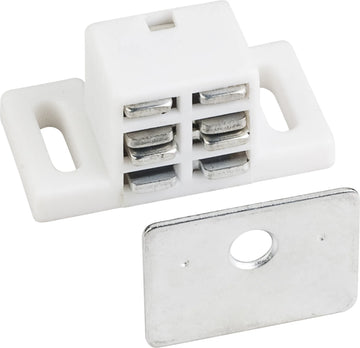
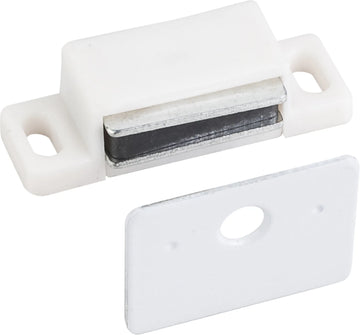
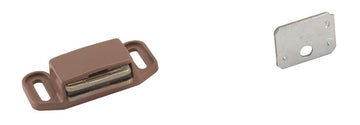
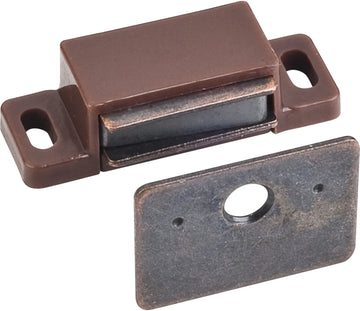
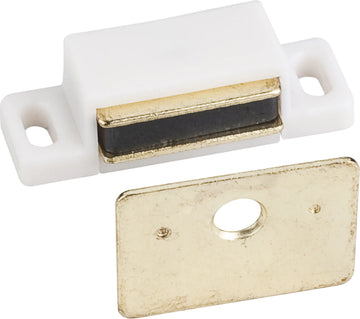
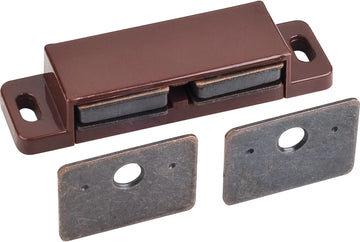
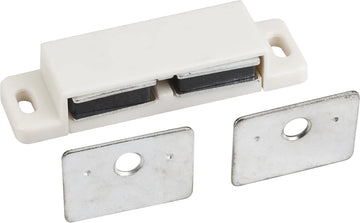
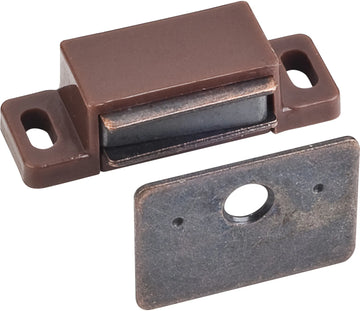
A cabinet catch or latch holds a door shut once it swings closed, and the type is what changes how it grips. Magnetic catches pull a strike plate against a magnet mounted inside the cabinet. Roller and ball catches use spring tension to snap the door shut. Push-to-open touch latches release the door with a light push, no visible pull required. Hardware Resources, Amerock, Belwith-Keeler, Hickory Hardware, and Top Knobs each make their own versions of these same mechanisms.
Which type fits which door
Magnetic catches handle most cabinet doors well and mount in minutes, with holding strength rated in pounds — heavier or slightly warped doors need a stronger magnet than a light interior door does. Roller and ball catches work on lighter doors where a soft click matters more than raw holding power. Push-to-open latches are the right call on any door meant to run without a visible knob or pull at all, though they need slightly more precise mounting to trigger reliably.
What's the difference between a catch and a latch?
The terms overlap in daily use, but a catch generally refers to the spring or magnetic mechanism itself, while a latch can also describe the full assembly, including a strike plate and sometimes a lock. Most cabinet doors only need a catch; latches with a locking function show up more on liquor cabinets and cabinets around small children, where keeping a door fully secured matters more than a quiet close.
Getting the fit right
Check whether your cabinets are overlay or inset, and framed or frameless, before ordering — mounting position changes with each. If you're not sure which holding strength or type fits your doors, a free design consultation settles it in one call. Latches pair naturally with new hinges on a full cabinet refresh.
Frequently Asked Questions
What's the difference between a cabinet catch and a latch?
A catch holds a door shut using friction, a magnet, or a spring-loaded ball, and releases as soon as you pull with enough force. A latch mechanically secures the door until you operate a lever, turn a knob, or give it a deliberate push, which makes it the better choice where an accidental bump shouldn't open the door.
What's the best catch for a cabinet with no knob or pull?
A push-to-open touch latch lets the door pop open with a light press and stay flush when closed, which is the standard choice for handleless, modern cabinetry. The tradeoff is a slightly heavier push than a knob-pull door needs, so it's worth checking the latch's release force against how the door will actually get used.
Do magnetic catches work on frameless cabinets as well as framed ones?
Yes — magnetic catches mount to either construction the same way, since they just need a flat surface for the catch and a matching strike plate on the door. The main thing to match is holding strength to the door's weight; an undersized catch on a heavy door will eventually pop open on its own.
Should I choose a ball catch or a roller catch?
A ball catch uses a spring-loaded ball that seats into a matching strike plate and releases with a firm pull, giving a crisp, positive close. A roller catch relies on a spring-tensioned roller that grips more loosely and wears in with use, which suits lighter doors that don't need a strong seal.
What Customers Say
Trusted by thousands of designers, builders, and homeowners
Kayla Malo is the most attentive and super human ever! My experience with this company is stellar!

Love working with Kayla, she is extremely helpful and quick with responding to my questions!
Kayla was GREAT!!!! Super help and fast answers. One of the best I've ever dealt with.