


Marble cabinet hardware: natural-stone knobs with metal mounts
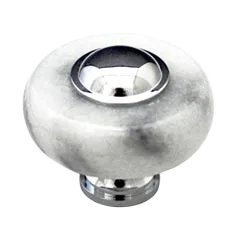
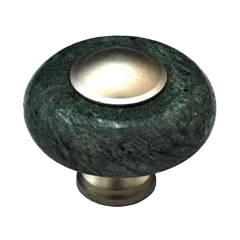
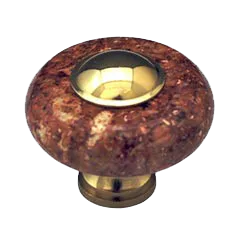
Marble cabinet knobs use natural stone (typically Italian marble in white, gray, green, or black variations) cut and polished into round or shaped knobs, then mounted on a metal base in a coordinating finish. The category is small but distinct. Marble is the only natural-stone material widely used in cabinet hardware, and the visible character (veining, color, polish) varies piece-to-piece because no two stones are identical. Cal Crystal sources Italian natural marble for its specific marble line.
What marble hardware brings to a kitchen or bath
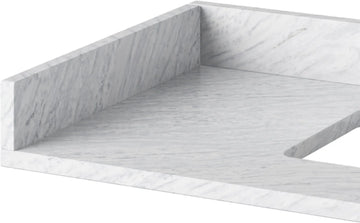
Material weight and natural pattern. A marble knob feels denser in the hand than a glass or zinc equivalent at the same dimensions because the stone is heavier. The visible veining and color variation gives every knob its own pattern. That means a row of marble knobs is not visually identical the way a row of zinc knobs in the same finish is. The category pairs naturally with marble or quartz counters that already carry similar color and veining language.
How marble hardware is constructed and cared for
The marble piece is cut and polished from solid stone, then drilled and mounted on a metal base (typically brass or zinc with a plated finish in chrome, nickel, or brass tones). The threaded post comes off the metal base, not the stone. The reason is Drilling and threading marble for direct mounting would compromise the stone. Care is straightforward: avoid acidic cleaners (vinegar, citrus) that can etch polished marble, and dry the surface after exposure to standing water. Small surface scratches in polished marble can sometimes be re-polished by a stone refinisher, though for cabinet hardware most buyers replace rather than refinish.
Where marble hardware fits
Formal traditional kitchens, period-revival bathrooms, dressing-room cabinetry, and any built-in meant to coordinate visually with marble counters or backsplashes. The category is less suited to industrial, rustic, or modern kitchens, where the polished-stone register reads disconnected from the surrounding materials. For closely related natural-material categories see wood hardware. For other non-metal categories see glass, crystal, and acrylic hardware.
Frequently Asked Questions
What is marble cabinet hardware and how is it constructed?
Marble cabinet knobs are made from natural stone — typically Italian marble in white, gray, green, or black variations — cut and polished into round or shaped knobs, then mounted on a metal base in a coordinating finish such as chrome, nickel, or brass. The threaded post comes from the metal base rather than the stone itself, because drilling and threading marble directly would compromise the stone's integrity.
Will marble cabinet knobs match each other exactly across a row of cabinets?
No. Because marble is a natural stone, the veining, color variation, and surface pattern differ piece-to-piece — no two stones are identical. A row of marble knobs will carry the same general color and material character but will not be visually uniform the way a row of zinc knobs in the same plated finish would be.
How does marble hardware compare to glass or crystal cabinet hardware?
Marble and glass are both non-metal cabinet hardware categories, but they differ in weight, pattern, and setting. A marble knob feels denser in the hand than a glass or crystal knob at the same dimensions because stone is heavier. Glass and crystal hardware tends to read as lighter and more reflective, making them common in a wider range of settings, while marble hardware reads as formal and pairs most naturally with spaces that already feature marble or quartz surfaces.
What cleaning and care practices apply to marble cabinet knobs?
Avoid acidic cleaners — including vinegar and citrus-based products — which can etch polished marble surfaces. Dry the knobs after exposure to standing water. Small surface scratches in polished marble can sometimes be addressed by a stone refinisher, though for cabinet hardware most buyers choose replacement over refinishing.
What Customers Say
Trusted by thousands of designers, builders, and homeowners
Kayla Malo is the most attentive and super human ever! My experience with this company is stellar!

Love working with Kayla, she is extremely helpful and quick with responding to my questions!
Kayla was GREAT!!!! Super help and fast answers. One of the best I've ever dealt with.